“It is not a question of if you will be attacked, but when.”
It sounds like a line from a Hollywood film. Today it is a reality for every business, SMEs included.
Illustrative case. One morning, an industrial SME finds its files encrypted by ransomware. No plan, no reflexes: everyone assumes someone else should act. Recovery takes days, clients grow worried, the managing director is exhausted.
The tipping point: what could have changed everything
This company had never tested how it would respond to a security incident. A 3-hour ransomware crisis simulation would almost certainly have revealed:
- that roles and responsibilities in a crisis were poorly defined;
- that no backup could be tested;
- that the emergency numbers were out of date;
- that nobody knew the safe shutdown procedures.
SMEs: a prime target for cyberattacks
Contrary to popular belief, cyberattacks do not only target large companies. SMEs have become favoured targets: less protected, less prepared to respond, and often willing to pay quickly to get back to business.
Practise to respond better: simulation is the key
Simulating a cyber crisis is now a strategic step. It tests the leadership team’s reflexes, exposes the weak points in your response set-up and teaches you to decide fast, under pressure, amid uncertainty.
The ready-to-run workshop: half a day of learning through play
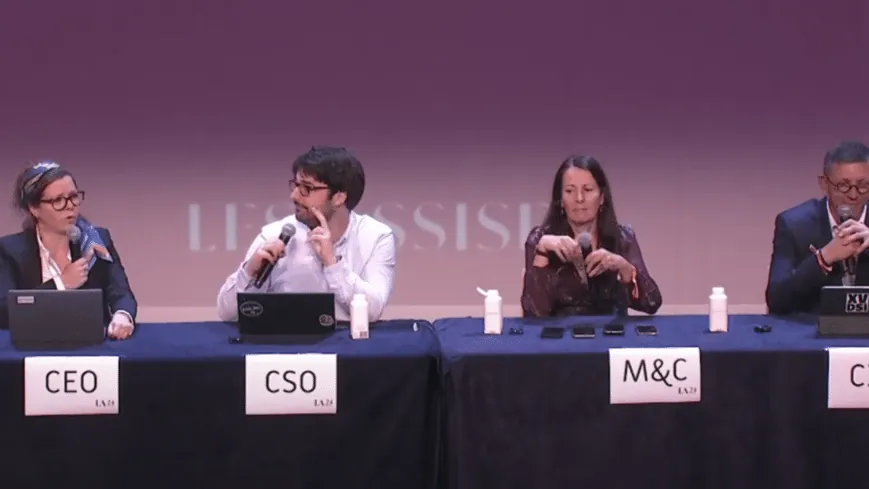
Each participant is given a role (CIO, CEO, HR, communications…). For 3 to 4 hours, the leaders play through a fictional scenario inspired by real events. An alert comes in and the crisis begins; the facilitator introduces new events. After the game, a debrief helps the company apply the lessons to its own situation and draw up an action plan.
11 scenarios, guides and training · €180 incl. VAT
Want to go further? A bespoke simulation
Every company is different. On quotation, a bespoke engagement starts with a focused review of your IT and key processes, identifies realistic scenarios for your business, then builds an exercise that reflects your reality.